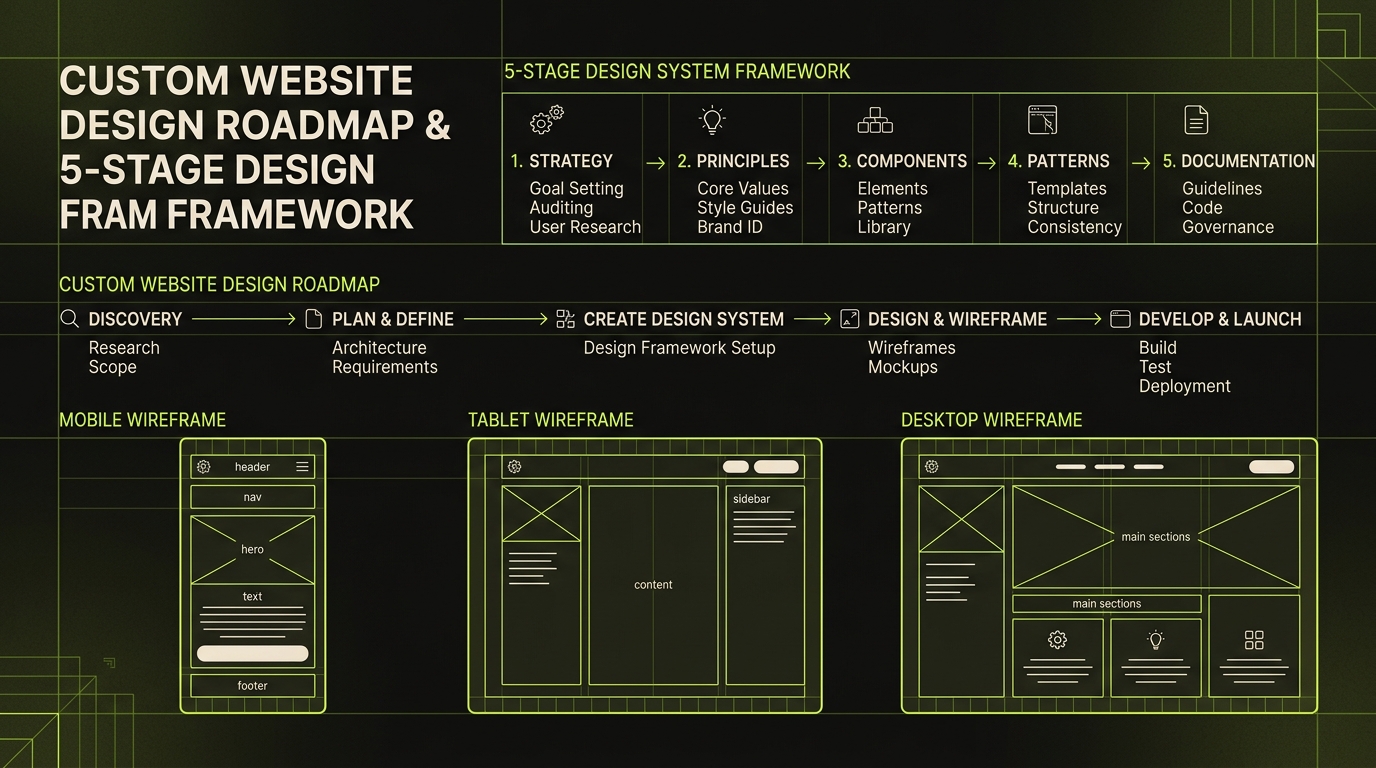
Getting a new website designed is a significant decision for a small business. It's often the largest single investment in your digital presence, and the outcome can have a meaningful impact on how clients perceive you and whether they contact you.
The process shouldn't be a black box. Here's what a well-run website design project actually looks like — from the first conversation to launch day.
Stage 1: Discovery (Week 1–2)
Before any design work begins, the best studios invest time in understanding your business, your customers and your goals. This typically involves a kick-off call, a questionnaire and a review of your current digital presence.
You'll be asked things like: Who is your ideal customer? What do you want visitors to do when they arrive? What are the two or three things your website must communicate? This phase shapes every decision that follows.
Discovery Defines Success
A website designed without discovery is just subjective art. A website designed around customer intent and conversion goals generates measurable return on investment.
Stage 2: Strategy and structure (Week 2–3)
With a clear understanding of the brief, the studio will define the site structure — how many pages, what each page needs to do, and what content is needed. This is where navigation, page hierarchy and calls to action get planned. A site that isn't structurally sound can't be fixed with design.
Stage 3: Design (Week 3–5)
Design starts with a homepage concept — the tone, visual direction and layout that will guide the rest of the site. You'll typically see one or two directions, give feedback, and the team will refine until the direction is locked. Then the remaining pages are designed to follow the same system.
What to look for in good web design: clear hierarchy, intentional use of space, obvious calls to action, and a visual style that actually reflects your business — not a generic template.
Stage 4: Development (Week 4–7)
Once design is approved, development begins. This is where the designs become a real, working website — responsive across screen sizes, optimised for speed and built on a CMS your team can manage. Good development also includes SEO foundations: proper heading structure, meta tags, image optimisation and sitemap.
Stage 5: Content, review and launch (Week 7–8)
Content is added, the site is reviewed across devices, final changes are made and the site goes live. A good studio will provide a walkthrough of how to use the CMS and a checklist of post-launch actions — analytics setup, Google Search Console, sitemap submission.
Pre-Launch Preparation Checklist
Before kickoff, prepare brand assets (SVG logos, colors, fonts), target audience personas, and 3-5 reference websites with specific notes on what you admire.
What to prepare before starting
- Your brand assets — logo, colours, fonts if available
- Any content you want to keep from your current site
- 3–5 examples of websites you like (and why)
- A clear idea of your primary audience and business goal
The clearer your brief, the better the outcome. Teams that invest in the discovery phase consistently produce better websites than those who skip straight to design.
Ready for a website that grows your business?
At Battlens, we design and develop bespoke websites engineered for clarity, speed, and conversion. Talk to us about your project.
Explore Website Design Services ↗